10 Bedroom Design Changes That Improve Sleep Quality
Small, evidence-based changes to light, temperature, sound, and layout can transform a bedroom into a space built for genuinely restful sleep — no renovation required.
Why This Matters
Sleep problems are rising across age groups worldwide, and most people blame stress, screens, or aging. But the bedroom itself is often working against good sleep without anyone noticing. Light leaks, poor airflow, the wrong wall color, and a noisy layout quietly chip away at sleep quality every single night.
Building science and design research now point to specific, fixable causes. None of them require a renovation budget. They require a clearer understanding of how light, temperature, sound, color, layout, and routine interact inside a bedroom — and a willingness to change a few things this week.
Who Is This Guide For?
This guide is useful across a wide range of homes, budgets, and sleep struggles.
🛏️
Light Sleepers
You wake at the smallest noise or streetlight flicker. This guide shows you exactly which light and sound leaks to seal first.
🏠
New Homeowners
You’re furnishing a bedroom from scratch and want to get bed placement, lighting, and layout right the first time.
👨👩👧
Parents & Caregivers
Screens and late bedtimes are wrecking your household’s sleep schedule. Get a wind-down routine that actually sticks.
🔑
Renters
You can’t repaint or renovate. Every fix here works with curtains, lamps, and furniture you can take with you.
Quick Navigation
Jump back to any section.
| 💡 Section 1 — Light Block evening light, get morning light, fix bulb color. | 🌡️ Section 2 — Temperature Cooling strategies for every climate, plus bedding tips. |
| 🔉 Section 3 — Noise Sound-absorbing materials, sealing gaps, smart bed placement. | 🎨 Section 4 — Color & Materials Calming palettes, natural textures, decluttering tips. |
| 🗺️ Section 5 — Layout Bed placement, screen-free zones, smarter storage. | 🌙 Section 6 — Routine Scent, soft lighting, a dedicated wind-down corner. |
1. Master Your Bedroom’s Light Environment
Light is the strongest signal your brain uses to decide when to sleep. Your body has an internal clock, called the circadian rhythm, that reacts to brightness and color temperature. Get the light wrong in your bedroom, and your brain stays alert long after you turn off the lamp. Bedroom design for better sleep starts here, because no other change works as well if light is fighting against you.
💡 CALLOUT
Research reviewed in Sleep Medicine Reviews found that evening exposure to blue-enriched light delayed melatonin release by up to two hours in some participants, pushing back the body’s natural sleep window.
Block Light at Night
Even small amounts of light can interrupt deep sleep. Streetlights, phone screens, and gaps around curtains all send a “stay awake” signal to your brain. In Mumbai apartments facing busy streets, or suburban homes near streetlights in the US, blackout curtains or cellular shades with side tracks solve most of the problem. Look for curtains rated to block at least 99% of light, and mount them wider than the window frame so light cannot sneak in around the edges.
Get Bright Light in the Morning
Darkness at night only works if you pair it with brightness in the morning. Position your bed or a chair near a window that gets direct morning sun. In Northern Europe, where winter daylight is short, a sunrise alarm clock can substitute for natural light. This morning brightness resets your circadian rhythm daily, so your body knows when night is supposed to start, too.
✅ TIP
Use smart bulbs that automatically shift from cool white to warm amber after sunset, so you don’t have to remember to change anything.
Choose the Right Bulb Color
Warm light (around 2700K) in the evening signals rest, while cool blue-white light (5000K and above) signals daytime. Many homes use the same bright white bulbs everywhere, which confuses the body at night. Swap evening bedroom bulbs for warm, dimmable LEDs, and avoid overhead lighting in the hour before bed. A simple bedside lamp with a warm bulb does more for sleep than an expensive mattress upgrade.
⚠️ WARNING
Avoid “daylight” or “cool white” bulbs in bedside lamps. They are marketed for kitchens and offices, not bedrooms, and can actively delay sleep onset.
2. Control Bedroom Temperature for Deeper Sleep
Temperature is the second biggest factor in sleep quality, right behind light. Your body needs to drop its core temperature by about 1-2 degrees Fahrenheit to enter deep sleep. A bedroom that’s too warm fights this process all night, even if you don’t notice it consciously.
💡 CALLOUT
The National Sleep Foundation lists temperature as one of the top three environmental factors affecting sleep quality, alongside light and noise.
The Ideal Sleep Temperature Range
Most sleep researchers agree the ideal bedroom temperature sits between 60-67°F (15-19°C). This applies across climates, though achieving it looks different depending on where you live. The goal isn’t a number on a thermostat; it’s making sure your body can cool down naturally as the night goes on.
Climate-Specific Cooling Strategies
In hot-humid climates like Singapore or coastal India, ceiling fans paired with dehumidifiers do more than air conditioning alone, since they manage moisture as well as heat. In hot-dry climates like Phoenix or the Gulf states, evaporative cooling and thick masonry walls keep bedrooms cool without excess energy use. In temperate and cold climates across Europe and North America, cracking a window for a few minutes before bed, even in winter, can help regulate temperature better than blasting the heater all night.
✅ TIP
If you share a bed with someone who prefers a different temperature, try a dual-zone mattress topper or separate lightweight blankets instead of fighting over the thermostat.
Bedding and Airflow
Natural fiber bedding, like cotton or linen, breathes better than synthetic blends and helps regulate body heat. Position furniture so air can circulate freely around the bed rather than getting trapped behind a headboard against a poorly ventilated wall. In older homes without central air, a simple cross-breeze from two open windows often outperforms a single fan.
⚠️ WARNING
Avoid placing the bed directly under a ceiling fan running on high all night. Direct, constant airflow can dry out skin and airways and disrupt sleep just as much as heat does.
AI Image Prompt — After Section 2
A wide architectural interior shot of a temperate-climate bedroom at night, window cracked open with sheer curtain gently lifted by a breeze, natural linen bedding in soft grey-blue tones, a ceiling fan visible on low, warm ambient light from a single dimmed lamp, person sleeping peacefully turned away from camera, photorealistic, soft cinematic shadows, architectural photography quality, captured on a 24mm lens.
3. Reduce Noise and Sound Disruption
Sound is harder to control than light or temperature because it often comes from outside your walls. Traffic, neighbors, and household noise can trigger brief awakenings you don’t even remember, but they still fragment your sleep cycle and leave you tired.
💡 CALLOUT
Research published by the World Health Organization links chronic nighttime noise exposure above 40 decibels to measurable increases in stress hormones and disrupted sleep architecture.
Sound-Absorbing Materials
Hard surfaces bounce sound around a room, while soft materials absorb it. Thick rugs, upholstered headboards, heavy curtains, and fabric wall hangings all reduce echo and outside noise. In dense urban apartments in cities like Tokyo or Hong Kong, layering textiles is often more practical than structural soundproofing.
Sealing Gaps and Doors
Sound travels easily through small gaps around doors and windows. A door sweep, weatherstripping, or even a rolled towel at the base of the door can noticeably cut hallway and street noise. This is one of the cheapest fixes in this entire guide, often costing less than a takeout meal.
✅ TIP
Test different bed positions during the day by sitting where the headboard would go and noticing which spots feel noisiest before committing to a layout.
White Noise and Layout Tricks
Placing the bed away from shared walls, hallways, or street-facing windows reduces direct noise exposure. A white noise machine or fan can also mask irregular sounds, like a neighbor’s footsteps or distant traffic, which are more disruptive than constant background noise.
⚠️ WARNING
Don’t rely on noise-canceling headphones for sleep. They can shift during the night, cause ear discomfort, and in rare cases affect ear health with extended nightly use.
4. Choose Colors and Materials That Calm the Mind
Color and material choices affect mood more than most homeowners expect. A bedroom painted in stimulating colors or filled with shiny, hard surfaces can keep the nervous system slightly activated, even when you feel calm on the surface.
💡 CALLOUT
A study from the University of Texas found that women who described their bedrooms as cluttered were significantly more likely to report sleep problems than those who described their space as calm and orderly.
Wall Color Psychology
Muted, low-saturation colors, like soft blues, sage greens, and warm neutrals, are linked to lower heart rates and calmer mood in design studies. Bright reds, oranges, and high-contrast patterns tend to be more stimulating, which is useful in a home office but counterproductive in a bedroom.
Natural Materials and Biophilic Touches
Wood, stone, and natural textiles create a calming sensory environment, a concept architects call biophilic design. A simple wooden bed frame or a stone-topped nightstand can have more impact on mood than any paint color alone. Even a single houseplant has been shown to support lower stress levels in small studies across different countries.
✅ TIP
Test a paint color in a small swatch on the wall facing your bed and look at it in the evening, under lamp light, since colors shift dramatically once the sun goes down.
Avoiding Visual Clutter
A cluttered bedroom keeps the brain scanning for unfinished tasks, even subconsciously. Closed storage, like baskets or cabinets with doors, hides visual mess better than open shelving. The goal isn’t a minimalist showroom; it’s reducing the number of objects your eyes land on right before you try to fall asleep.
⚠️ WARNING
Avoid all-white bedrooms if the room gets a lot of cool light at night. While calming in photos, an all-white scheme under cool LED light can feel sterile and clinical rather than restful.
5. Design the Room Layout for Better Sleep Hygiene
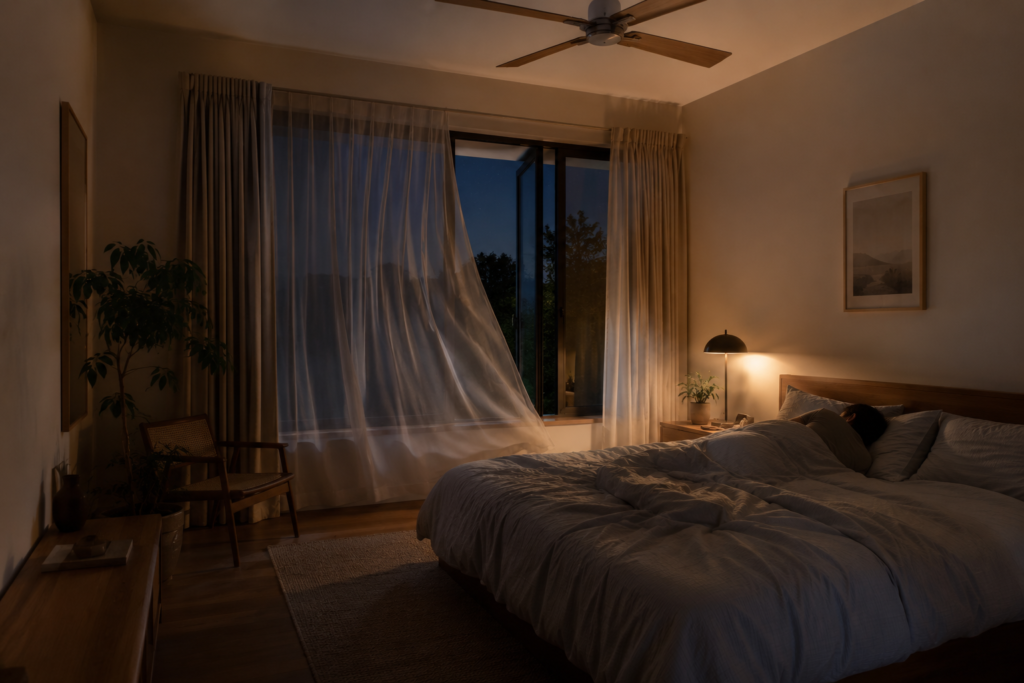
Where you place furniture changes how your brain reads the room. A bedroom set up for sleep looks and functions differently from one set up for work, scrolling, or socializing, even if it’s the same four walls.
💡 CALLOUT
Interior designers across multiple countries report that simply moving a bed out of direct sightline from the door is one of the most frequently requested “instant comfort” changes in client consultations.
Bed Placement
Position the bed so it isn’t directly in line with the door, a layout principle found across many traditional design systems, including Vastu Shastra in India and Feng Shui in China. Beyond tradition, this placement simply feels more secure and reduces the chance of being startled awake by movement or light from the hallway.
Keeping Work and Screens Out
A desk, treadmill, or TV in the bedroom blurs the line between “awake space” and “sleep space.” If a separate room isn’t possible, use a folding screen, curtain, or furniture placement to visually separate the work zone from the bed, even in a small studio apartment.
✅ TIP
If you can’t move your bed, hang a curtain or screen partway across the doorway sightline instead of rearranging the whole room.
Storage and Clutter Control
Under-bed storage, vertical shelving, and multi-purpose furniture free up floor space without sacrificing function. In smaller homes across Southeast Asia and Europe, built-in wardrobes with sliding doors are a common solution that keeps clothing out of sight without taking up walking space.
⚠️ WARNING
Don’t place a mirror directly facing the bed. Many sleep and design consultants note it can create a subtle, unsettling feeling for some people, especially with reflected movement from streetlights or hallway light at night.
6. Build a Pre-Sleep Sensory Routine Into the Room
A bedroom isn’t just furniture and paint; it’s a sequence of cues that tell your brain to wind down. Designing for that sequence, not just the static room, is the final and most overlooked step in sleep-friendly design.
💡 CALLOUT
Sleep specialists call this principle “stimulus control”: training the brain to link the bed exclusively with sleep, rather than with other activities, to reduce the time it takes to fall asleep.
Scent and Air Quality
Stuffy, stagnant air can make a room feel uncomfortable without an obvious cause. Cracking a window for ten minutes daily, using a small air purifier, or adding a few drops of lavender or sandalwood to a diffuser are simple ways to improve air quality and create a consistent “wind down” scent cue.
Soft Transition Lighting
Instead of going straight from bright lights to total darkness, build in a transition. A dimmable lamp, a plug-in nightlight on a timer, or smart bulbs that gradually dim over 20-30 minutes mimic a natural sunset and ease the body into rest mode.
✅ TIP
Keep your wind-down corner’s lighting separate from your main bedroom switch so you can dim it without affecting the rest of the room.
A Dedicated Wind-Down Corner
A small chair, a reading lamp, and a side table create a designated spot for the last 20 minutes before bed, separate from the bed itself. This trains your brain to associate the bed only with sleep, not with scrolling, reading work emails, or watching shows.
⚠️ WARNING
Avoid charging your phone in the wind-down corner. Even on silent, the visual presence of a phone has been shown to increase pre-sleep alertness in several behavioral studies.
Sleep Environment Scorecard
Rate your bedroom from 1 (needs work) to 5 (excellent) in each category. A total score below 15 signals it’s time to start with the Quick Wins Checklist above.
| Category | What to Check | Your Score (1-5) |
| Light Control | Darkness at night, brightness in morning, bulb color | |
| Temperature | Cooling at night, bedding breathability, airflow | |
| Sound | Outside noise, door/window seals, white noise use | |
| Color & Material | Wall color, clutter, natural materials | |
| Layout & Routine | Bed placement, screen-free zone, wind-down corner |
Bedroom Audit Matrix
Use this matrix to match common problems to the section of this guide that fixes them.
| Room Zone | Common Issue | Likely Fix | See Section |
| Windows | Light leaks at edges | Wider blackout curtains | Section 1 |
| Thermostat / Vents | Room stays warm overnight | Climate-specific cooling | Section 2 |
| Doors | Hallway noise and light | Door sweep, weatherstripping | Section 3 |
| Walls | Stimulating color, clutter | Muted palette, closed storage | Section 4 |
| Bed Position | In line with door, near noise | Reposition away from sightline | Section 5 |
| Nightstand | Phone charging within reach | Move charger, build wind-down zone | Section 6 |
Light Exposure Guide
| Time of Day | Light Type to Seek or Avoid | Suggested Action |
| Morning (within 1 hour of waking) | Seek bright natural light | Open curtains immediately or sit near a window |
| Midday | Natural daylight, neutral indoor light | No special action needed |
| Evening (2-3 hours before bed) | Avoid bright, cool-toned light | Switch to warm, dim lamps |
| Night (in bed) | Avoid all light, including screens | Use blackout curtains, dim or remove devices |
Nighttime Routine Framework
A simple 60-minute structure to pair with your redesigned bedroom.
| Time Before Bed | Action | Purpose |
| 60 minutes | Dim main lights, switch to warm lamps | Begin circadian wind-down signal |
| 45 minutes | Move devices out of the bedroom or out of reach | Reduce pre-sleep alertness |
| 30 minutes | Sit in wind-down corner, light reading or stretching | Separate bed from waking activity |
| 15 minutes | Crack a window or check room temperature | Support natural body cooling |
| 0 minutes | Lights off, into bed | Begin sleep with all cues aligned |
30-Day Action Plan
Spread these changes across four weeks so they’re easy to stick with.
| Week | Focus | What To Do |
| Week 1 | Audit bedroom lighting | Walk through Section 1; fix light leaks and swap bulb colors |
| Week 2 | Reduce visual clutter | Apply Section 4’s clutter and storage fixes |
| Week 3 | Improve thermal comfort | Apply Section 2’s climate-specific cooling strategy |
| Week 4 | Optimize sleep environment | Combine Sections 3, 5, and 6 — sound, layout, and routine |
Key Takeaways
The six biggest shifts, in one scroll.
| ✓ Blocking light at night and getting bright light each morning is the single highest-impact change you can make. |
| ✓ A bedroom between 60-67°F (15-19°C) lets your body cool down naturally for deeper sleep. |
| ✓ Soft materials like rugs and curtains cut noise more cheaply than structural soundproofing. |
| ✓ Muted colors and natural materials calm the nervous system more than any single furniture upgrade. |
| ✓ Moving the bed out of direct sightline from the door is one of the most requested “instant comfort” fixes. |
| ✓ A 20-minute screen-free wind-down routine trains your brain to associate the bed only with sleep. |
Quick Wins Checklist
Start with these tonight — each takes under 15 minutes and needs no special tools or budget.
- Swap your bedside bulb for a warm, dimmable LED (2700K or lower)
- Roll a towel against the bottom of your bedroom door to block noise and light
- Move your phone charger out of arm’s reach from the bed
- Crack a window for 10 minutes before bed, even in cooler weather
- Clear visible clutter from nightstands and dresser tops
- Reposition your bed so it isn’t in direct line with the doorway
Frequently Asked Questions
What is the ideal bedroom temperature for sleep?
Most sleep researchers recommend 60-67°F (15-19°C). The exact number matters less than making sure your body can cool down naturally through the night, using the climate-specific strategies in Section 2.
Does paint color really affect sleep quality?
Design studies link muted, low-saturation colors like soft blue and sage green to calmer mood and lower heart rate, while bright, high-contrast colors tend to be more stimulating. Color alone won’t fix poor sleep, but it supports the other changes in this guide.
Can I improve sleep in a small bedroom or studio apartment?
Yes. Most of the highest-impact changes, like blackout curtains, bulb color, and a wind-down corner, take very little space. Use a curtain or folding screen to separate the sleep zone from work or living areas if you can’t use a separate room.
How much does blackout lighting actually help?
Significantly. Studies on evening light exposure show it can delay melatonin release by up to two hours, which pushes back your entire sleep window. Blocking light at night and getting bright light in the morning are two of the most well-supported changes in sleep science.
What’s the single highest-impact change I can make this week?
For most homeowners, fixing bedroom light, both blocking it at night and getting bright light in the morning, produces the fastest noticeable improvement. Start with the Quick Wins Checklist if you want results before the weekend.
Continue Exploring
Build on this guide with related ARCNET reads:
- Coming soon – Circadian Lighting — a deeper look at designing light for your body’s internal clock
- Coming soon – Low-Stress Home Design — calming design principles for every room, not just the bedroom
- Wellness Architecture (Pillar) — the broader framework connecting health and home design
- Biophilic Design Beyond Indoor Plants (Pillar) — natural materials and biophilic strategy in depth
Call To Action
Ready to put this into practice? Download the free Bedroom Sleep Audit Checklist — a printable, room-by-room walkthrough based on the Sleep Environment Scorecard and Bedroom Audit Matrix in this guide.